

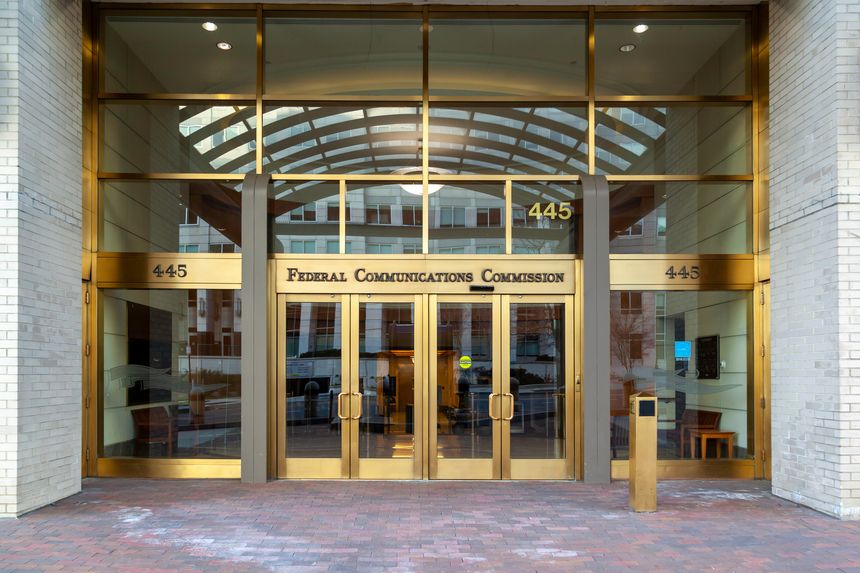



On March 23, 2026, the FCC released a Public Notice announcing that new, foreign-produced consumer routers have been added to the FCC’s Covered List. This means that new router models, under rules adopted by the FCC in its Equipment Authorization Security proceeding, can no longer receive FCC equipment authorizations known as grants of certification required for importation, and their marketing and sale in the U.S.
Under the Covered List determination and the FCC’s equipment authorization rules, existing router models that have previously been issued a grant of certification, evidenced through an FCCID number, may continue to be sold and to be used by consumers, with limited continued upgrade support permitted. The new Covered List determination applicable “to routers produced in a foreign country” is limited to “consumer-grade networking devices that are primarily intended for residential use and can be installed by the customer”, based on NIST Internal Report 8425A (Recommended Cybersecurity Requirements for Consumer-Grade Router Products).
The FCC’s Covered List is a list of communications equipment and services, as defined in the Commission’s rules, that are deemed to “pose an unacceptable risk to the national security of the U.S. or the safety and security of U.S. persons.” The addition of foreign-produced consumer routers stems from a March 20, 2026, National Security Determination (NSD) made by an Executive Branch national security interagency group, finding that consumer-grade routers produced in a foreign country, regardless of whether the manufacturer is a U.S. or foreign entity and regardless of the non-U.S. country of production, pose an “unacceptable risk” to U.S. national security and should be banned from the U.S. market through addition to the Covered List.1
Router manufacturers can apply to the Department of War (DoW, the alternative name for the Department of Defense authorized through Executive Order) or the Department of Homeland Security (DHS) for conditional approval that, if granted, would exempt a particular router or class of routers from the Covered List for a period of up to 18 months. Such requests must be supported by responses to a detailed list of information requests appended to the NSD, including information on the manufacturer’s corporate structure and organization, disclosures on its manufacturing and supply chain, and its “detailed time-bound plan” and commitment to U.S. manufacturing and onshoring of its consumer router production.
The FCC’s Office of Engineering and Technology (OET) also released a Public Notice on March 23 indicating that certain equipment authorization Covered List prohibitions will not apply to foreign-made routers until March 1, 2027. The waiver will allow currently authorized routers on the Covered List, which, as noted, may continue to be sold and used, to receive important software and firmware updates, including “all software and firmware updates to ensure the continued functionality of the devices, such as those that patch vulnerabilities and facilitate compatibility with different operating systems.” OET will re-evaluate whether to extend the waiver before it expires, potentially extending support and product end of life for existing models.
Long-term, the Administration, as indicated in the NSD, hopes that the ban will result in router manufacturers moving their production to the U.S. Indeed, an aggressive transition to onshoring router manufacturing appears to be an explicit prerequisite for conditional approval and exemption from the Covered List of a manufacturer’s foreign-produced routers. The Trump Administration has made onshoring of jobs and manufacturing a priority, and the ban on foreign-produced consumer routers, in addition to its stated national security basis, also advances this strategic goal, through this is one not typically within the ambit of the FCC.
However, that has recently been changing, including with the December 2025 Public Notice adding to the Covered List foreign-produced Unmanned Aircraft Systems (UAS) and UAS components, and the communications and video surveillance equipment of certain UAS manufacturers.
In addition, following closely on the heels of the Router Public Notice, the FCC on March 26, 2026 also adopted a Notice of Proposed Rulemaking proposing to place limits and other requirements on offshore call centers used by communications providers, with the stated purpose to advance consumer protection interests, but also with the explicit goal of bringing offshore call center jobs back to the U.S.
According to one analyst, given the OET decision to allow firmware updates for existing models, the router Covered List addition is not expected to have an immediate impact on the retail distribution chain for routers, such as those integrated with cable modems distributed through broadband providers, and presumably, for similar reasons, routers sold through online and in-store retailers. On the other hand, it would seem that the impacts on manufacturer supply chains for new models, could be more severe, particularly with few details on how the DoW and DHS conditional approval process will work in practice, including with respect to what countries of production will be subject to waiver, any preferences given to U.S. companies, and expected timing on action.
There is also a further open question on the scope of the ‘produced in a foreign country’ definition and how will it be applied. The NSD specifies that “production generally includes any major stage of the process through which the device is made, including manufacturing, assembly, design, and development.” This would seem to suggest that a router designed and developed in a foreign country, including in trusted U.S. ally countries, would be deemed foreign produced, even if the device is manufactured and assembled entirely in the U.S. In terms of the use of foreign components used in routers that are assembled in the U.S., in accompanying FAQs, the FCC has indicated that routers otherwise produced in the United States will not be deemed “covered” equipment solely because they contain one or more foreign-made components, unless the “covered” component part is a modular transmitter under the FCC’s rules.
A final concern with the foreign-produced router addition to the Covered List, which the FCC will no doubt hear more on, is that, as with the December 2025 UAS Covered List Public Notice, the addition to the Covered List of foreign-produced consumer routers was done with no notice and opportunity to be heard. This was the case both with the adoption of the NSD by the national security agencies, and of the router Public Notice by the FCC’s Public Safety and Homeland Security Bureau.
If you have any questions about this alert, please contact the authors of this alert or the Womble Bond Dickinson attorneys with whom you normally work.
References
1 The NSD is attached as Appendix C to the Router Public Notice. The Covered List addition of “routers produced in a foreign country”, incorporates the definition of “router” used in the NSD. The NSD (at 4), states that for purposes of the NSD, the term “Router” is defined by NIST Internal Report 8425A “to include consumer-grade networking devices that are primarily intended for residential use and can be installed by the customer. Routers forward data packets, most commonly Internet Protocol (IP) packets, between networked systems.” This would appear to exclude enterprise and industrial-grade networking devices, which, no doubt, will be a point of demarcation and issue the Commission will be asked to clarify.
/Passle/6878183c1547331efeed13be/SearchServiceImages/2026-08-06-14-12-11-890-6a74963bf96ff179f854a7d0.jpg)
/Passle/6878183c1547331efeed13be/SearchServiceImages/2026-08-03-17-36-32-417-6a70d1a0b949cf9a2cde52c5.jpg)
/Passle/6878183c1547331efeed13be/SearchServiceImages/2026-07-27-15-27-13-095-6a6778d12f7f4abc62410a19.jpg)