

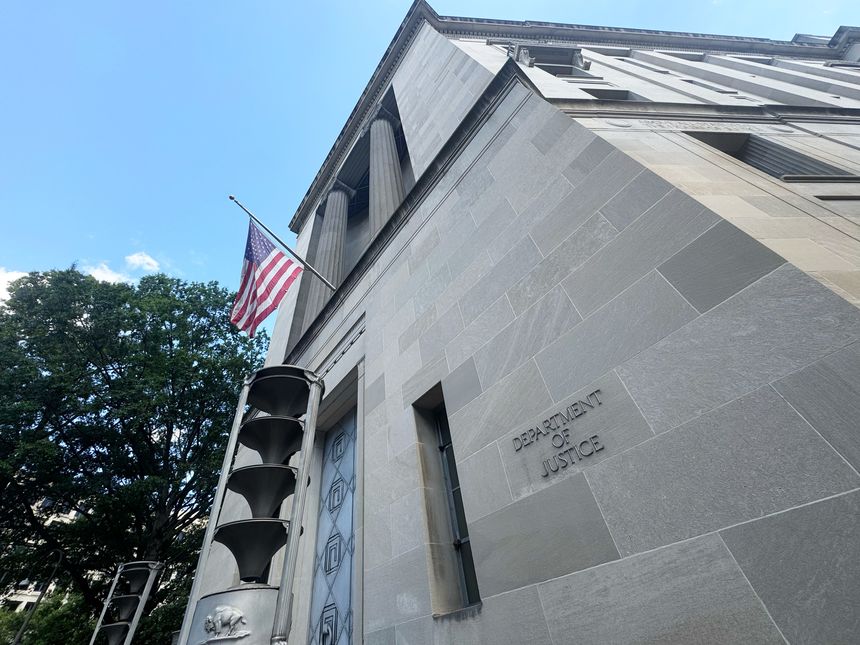


With Approximately 500 Attorneys and Staff, the NFED Will Become One of DOJ's Largest Litigating Components
On August 13, 2026, the Department of Justice ("DOJ") released a memorandum outlining the enforcement priorities of the newly created National Fraud Enforcement Division ("NFED"). The memorandum signals a major expansion of federal fraud enforcement, identifies five core priority areas, and details a rapid organizational buildout that will bring the NFED to approximately 500 attorneys and professional staff, making it one of DOJ's largest litigating components.
The message is clear: DOJ intends to centralize fraud enforcement resources, leverage advanced data analytics, and pursue an aggressive, coordinated approach to fraud affecting the federal government, healthcare systems, taxpayers, international trade, and corporate America.
We summarize the memorandum's key points below and discuss practical implications for companies operating in this heightened enforcement environment.
Background
Earlier this year, President Trump announced the creation of the NFED "[t]o combat the rampant and pervasive problem of fraud in the United States.” The move reflects DOJ's view that fraud against government programs, taxpayers, businesses, and consumers has reached extraordinary levels. Government Accountability Office estimates place annual federal fraud losses between $233 billion and $521 billion.
The August 13 memorandum provides the first comprehensive overview of the NFED's structure and mission. By late August 2026, the NFED is expected to reach approximately 500 attorneys and professional staff, positioning it among DOJ's largest litigating components. DOJ also plans additional expansion over the next two years.
The NFED will be organized into specialized sections supported by asset recovery attorneys, appellate lawyers, privilege review teams, corporate enforcement advisors, data scientists, and litigation support professionals. The structure reflects DOJ's stated goal of combining traditional prosecutorial resources with sophisticated technology and data analytics to identify, investigate, and prosecute fraud more efficiently.
Companies should also note the NFED's expanding focus on public corruption. Through a dedicated public corruption team, the NFED will investigate alleged misconduct involving state and local officials and the misuse of public funds. The initiative is likely to feature aggressive use of federal program bribery, honest services fraud, Travel Act, and related bribery theories, further elevating the importance of anti-corruption compliance for organizations that interact with government decision-makers.
Five Enforcement Priorities
1. Public Trust and Financial Integrity
The NFED will prioritize fraud involving federal funds, government programs, financial markets, and consumers. Procurement fraud is identified as a “critical priority,” including:
- Inflated or fictitious pricing
- Bid rigging and collusion
- Conflicts of interest and kickbacks
- Product substitution
- Fraudulent invoicing and billing
DOJ also highlights fraud involving grants, loans, disaster relief, veterans' benefits, student aid, childcare programs, and other federally funded initiatives.
2. Health Care Fraud
DOJ cites estimates that fraud accounts for between three and ten percent of U.S. healthcare spending. The NFED intends to expand the Health Care Fraud Strike Force model and deploy advanced data analytics to identify fraud involving:
- Medicare and Medicaid
- Telehealth platforms
- Controlled substance diversion
- Home health and hospice services
- Misleading promotion of medical products and services
3. Internal Revenue and Tax Fraud
The memorandum describes criminal tax enforcement as a core NFED responsibility. Priority targets include:
- Dishonest tax preparers
- Taxpayers concealing income
- Promoters of fraudulent tax shelters and avoidance schemes
DOJ intends to combine traditional tax enforcement authorities with financial forensics and data-driven detection capabilities to identify misconduct and pursue cases where tax and fraud offenses intersect.
4. Global Trade and Commerce
The NFED will lead DOJ's criminal enforcement efforts involving:
- Tariff evasion
- Customs fraud
- Sanctions violations
- Country-of-origin fraud
- Transshipment schemes
- Forced labor in supply chains
A newly established Trade Fraud Task Force will focus on systemic, high-impact trade and customs violations.
5. Corporate Misconduct
DOJ states that the NFED already has a “strong pipeline” of corporate investigations. The NFED will continue pursuing companies that profit from employee misconduct while simultaneously encouraging voluntary self-disclosure, cooperation, and remediation through DOJ's Corporate Enforcement and Voluntary Self-Disclosure Policy ("CEP") (see our alerts on the CEP here and here). The memorandum reinforces DOJ's longstanding position that companies that promptly report misconduct, cooperate with investigations, and implement meaningful remediation may receive substantially more favorable outcomes.
Key Takeaways
1. DOJ Is Making an Unprecedented Investment in Fraud Enforcement
With approximately 500 attorneys and professional staff at launch, the NFED will immediately become one of DOJ's largest litigating components. Companies should expect more investigations, faster case development, increased coordination among enforcement agencies, and a greater volume of enforcement actions.
2. Data Analytics Will Drive Detection
The memorandum repeatedly emphasizes technology, data science, and analytics. Government contractors, healthcare providers, grant recipients, and other entities receiving federal funds should expect increasingly sophisticated scrutiny of billing practices, certifications, claims submissions, and reporting data.
3. Corporate Enforcement Remains a Priority
The creation of a dedicated Corporate Enforcement Section confirms DOJ's continued focus on corporate misconduct. The memorandum also reaffirms the importance of voluntary self-disclosure, cooperation, and remediation in determining enforcement outcomes.
Companies should also consider the implications for anti-corruption compliance. Although the FCPA Unit remains within the Criminal Division's White Collar and Corporate Enforcement Section, both enforcement regimes operate under the same CEP framework. As a result, the strategic value of self-disclosure and cooperation remains unchanged, and there is potential for coordination where foreign corruption overlaps with NFED priorities.
4. Government Contractors Face Elevated Risk
Procurement fraud is one of the memorandum's clearest enforcement priorities. The breadth of conduct identified, including defective pricing, bid rigging, product substitution, and false claims for payment, suggests heightened scrutiny across virtually every segment of the federal contracting community.
5. Expect More Multi-Agency Investigations
The memorandum repeatedly emphasizes coordination among U.S. Attorneys' Offices, DOJ litigating divisions, federal agencies, inspectors general, and state and local authorities. Companies facing investigations should expect enforcement authorities to use multiple criminal, civil, administrative, and regulatory tools simultaneously.
Compliance Considerations
In light of the NFED's priorities, companies should consider:
- Reassessing compliance programs and internal controls in areas aligned with the NFED's enforcement priorities.
- Strengthening reporting, investigation, escalation, and remediation protocols to facilitate timely evaluation of potential self-disclosure decisions.
- Reviewing government contracting, grant administration, and billing practices.
- Evaluating customs, sanctions, supply chain, and trade compliance programs.
- Ensuring boards and senior management are prepared to respond quickly to government inquiries.
- Developing proactive data-monitoring and testing capabilities to identify potential issues before they attract government attention.
Conclusion
The NFED represents one of the most significant reorganizations of DOJ's white-collar enforcement function in decades. With approximately 500 attorneys and professional staff, broad jurisdiction, and a stated commitment to data-driven enforcement, the NFED is positioned to become one of DOJ's most consequential litigating components. Organizations operating in any of the NFED's priority areas should expect increased scrutiny and evaluate now whether their compliance, reporting, and investigation frameworks are prepared for a more aggressive enforcement landscape.
Womble Bond Dickinson (US) LLP's White Collar Defense and Criminal Investigations Team navigates domestic and international clients in all manner of white collar, regulatory, corporate, and congressional investigations. Our team includes a distinguished roster of veteran defense attorneys, former federal prosecutors and U.S. Attorneys who served at the highest levels of the Department of Justice and at leading United States Attorneys' Offices. Our team includes Chambers Ranked (Band 1) lawyers and alumni of the U.S. Department of Justice, the SEC’s Enforcement Division, the U.S. Senate, House of Representatives, and in-house compliance specialists of publicly traded companies.
/Passle/6878183c1547331efeed13be/SearchServiceImages/2026-08-06-14-12-11-890-6a74963bf96ff179f854a7d0.jpg)
/Passle/6878183c1547331efeed13be/SearchServiceImages/2026-08-03-17-36-32-417-6a70d1a0b949cf9a2cde52c5.jpg)
/Passle/6878183c1547331efeed13be/SearchServiceImages/2026-07-27-15-27-13-095-6a6778d12f7f4abc62410a19.jpg)